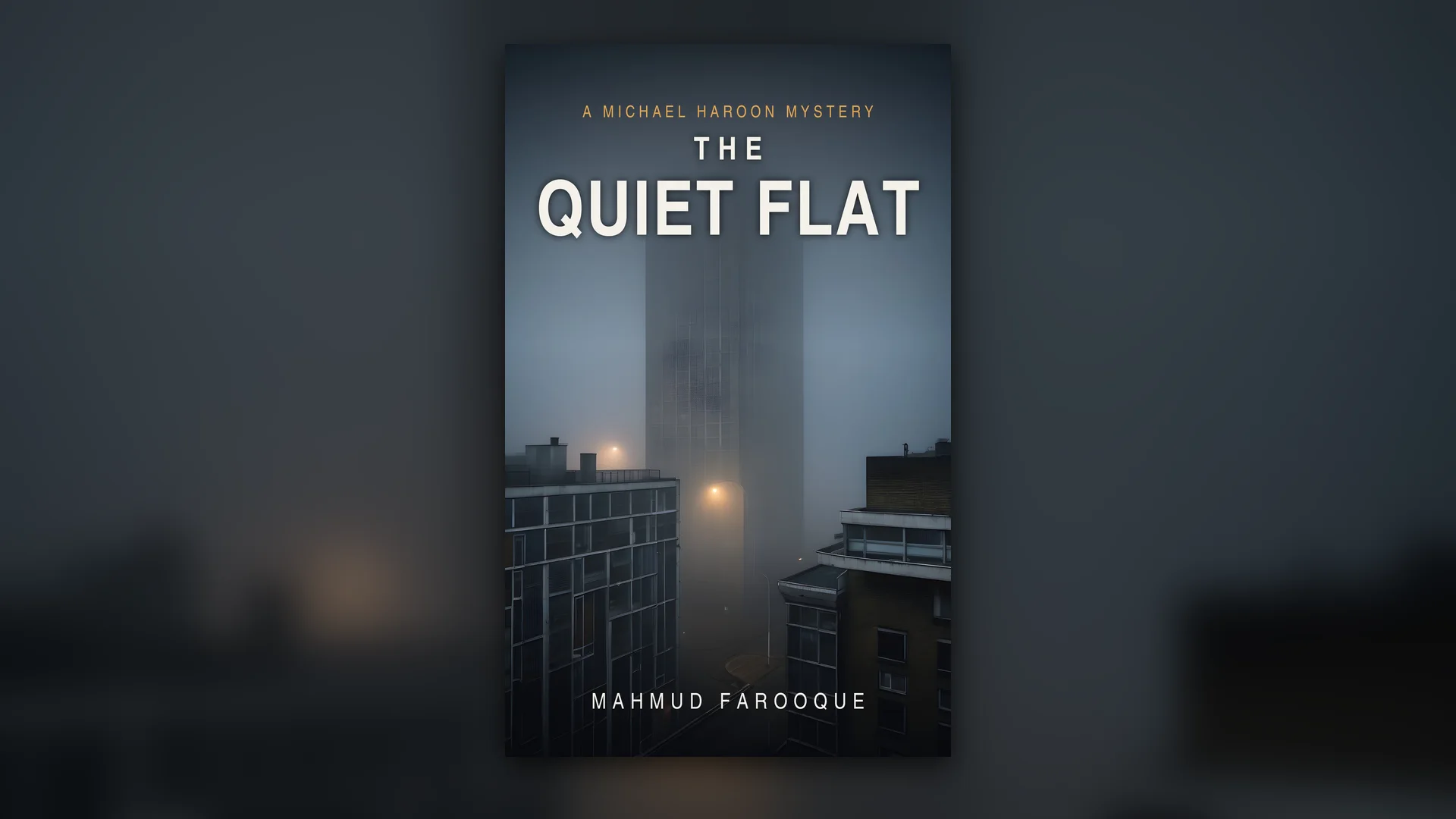
The Quiet Flat: My First Crime Novel, and a Look Inside the Story
The Quiet Flat, Book 1 of The Michael Haroon Mysteries, is out on Kindle and in paperback. A locked flat in Poplar, a 1998 verdict, and a spoiler-free preview of the story right up to its ending.
My first novel is out. The Quiet Flat is Book 1 of The Michael Haroon Mysteries, a cold-case crime series set in East London. It is on Amazon as a Kindle eBook and as a paperback. Below is what the book is about, a taste of the opening, and a spoiler-free look at where the story goes, right up to the edge of the ending.
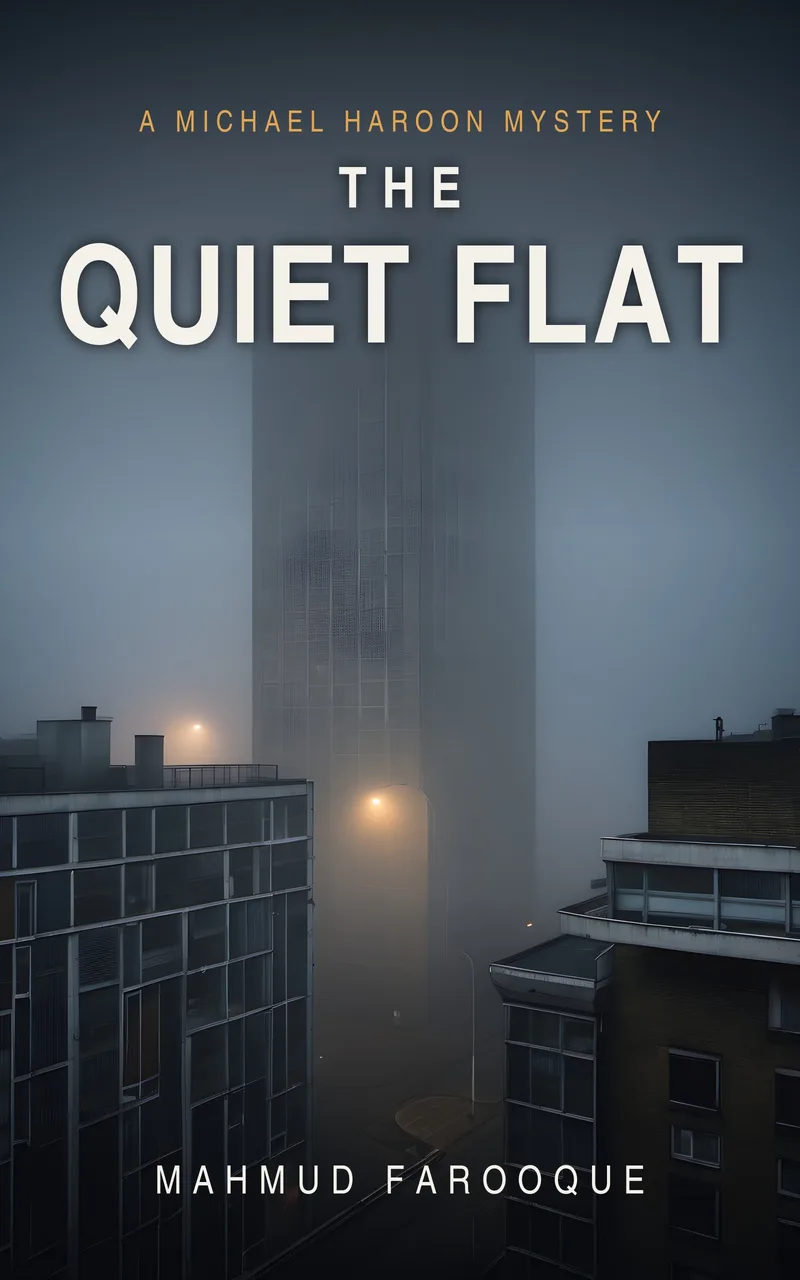
The book at a glance
| Title | The Quiet Flat: A Michael Haroon Mystery |
|---|---|
| Series | The Michael Haroon Mysteries, Book 1 |
| Author | Mahmud Farooque |
| Publisher | Lonesome Studio |
| Genre | Crime fiction, cold-case mystery, fair-play whodunit |
| Setting | Poplar, Whitechapel and the river, East London, 1998 and today |
| Length | Prologue and 34 chapters, about 90,000 words (284-page paperback) |
| Formats | Kindle eBook, $3.99 (free on Kindle Unlimited) and paperback, $14.99 |
The story
In November 1998, a family of five was found dead inside a locked ninth-floor council flat in Poplar, East London. The front door was chained from the inside. The gas fire was still burning. The father was hanging in the hallway. Within eight days the police had called it a murder-suicide by a man in debt, and the file went on a shelf.
One daughter survived, because she was sleeping at a school friend's house that night. Her name is Shirin Rahman, and twenty-eight years later she is a primary-school head teacher in Ilford who has never once believed that her father killed her family. He was a gentle man. He was left-handed. He had an appointment with the police the morning after he died, and nobody has ever asked why.
She takes the case to Michael Haroon: ex-Army intelligence officer, widower, father of a fourteen-year-old daughter, a man who prays before dawn and works from a small office above a sari shop in Whitechapel. He reads the old file the way he used to read an intelligence brief, and the more he reads, the less of it holds together.
How it opens
The book starts on the morning the flat was opened, through the eyes of a nineteen-year-old police constable eleven weeks out of training:
The smell reached her on the seventh floor.
PC Lisa Grant, nineteen years old, eleven weeks out of Hendon, stopped on the stairwell of Carradine House with her hand on the rail and breathed it in before she could stop herself: sweet, flat, heavy, like the inside of a cooker that has been left on.
On the landing outside Flat 9C, an elderly Irish neighbour in a pink housecoat is pressing both hands against the door and saying she heard footsteps in the night. Nobody writes that down. It is one of the first things Michael Haroon digs back up.
Who you will meet
- Michael Haroon, the investigator. Patient, observant, careful with people, and still grieving his wife Amira.
- Shirin Rahman, the survivor who brings the case, and the warm extended family who raised her after 1998.
- Commander Helen Ashworth, the senior officer who quietly hands Michael the file, close to retirement and carrying something of her own.
- DI Gareth Pike, today's cold-case lead, who would very much like the old verdict to stay where it is.
- DS Kofi Mensah, a young detective who helps when he should not, and the only other man at the police leaving-do drinking lemonade.
- Dr Ingrid Sørensen, a forensic pathologist who re-reads a 1998 post-mortem and sees what was missed.
- Jalal Talukdar OBE, restaurant owner and philanthropist, about to collect a major charity award.
- Retired DS Roger Brennan, the officer who closed the case in eight days and now lives on a boat at Limehouse.
- Father Declan Mooney and Brenda Walsh, a Poplar priest and a sharp-tongued neighbour who never believed the official story either.
- Noor, Michael's daughter, and Dadu, his father, who keep the house running and help the case more than they mean to.
Where the story goes (no spoilers)
The book is told in four parts, and each one turns the screw a little further.
Part One: The File
Michael gets the case file, meets Shirin, and visits Carradine House, now half-empty and waiting for demolition. He has dinner with the family who raised her, and he reads crime-scene photographs that the original team looked at and did not see. One small detail in those photographs tells him, before dawn one morning, that the scene was arranged by someone else.
Part Two: The Cracks
A knot that was tied by the wrong hand. A pill bottle with the wrong name on the label. A sealed camcorder tape in an evidence store that was logged in 1998 and never watched. A council repair note about a flat that was supposed to be empty. A charity gala at the Dorchester where a polite man in a dinner jacket mentions Michael's daughter by name.
Part Three: The Hunt
Someone starts closing doors. A witness from 1998 does not live to keep an appointment. An old visitor book shows where the father was going on the morning after he died. A frightened insider asks to meet on a bridge in St James's Park at nine at night. The questions are no longer only about 1998: they are about who is still protecting the answer today.
Part Four: The Truth
This is where the book runs fast. A deathbed confession in a hospice in Essex, interrupted by a visitor nobody invited. A chase at dawn across the Thames foreshore at Wapping at low water, ending face-down in the mud. And then a Saturday afternoon in a family home in Ilford, a pot of beef bhuna cooked to a dead man's recipe, and everyone who matters in the same room while Michael lays the evidence out, one piece at a time, until a single frozen frame of old video says what nobody in that room wants to hear.
Who killed the Rahman family, and why it was hidden for twenty-eight years, is for the book to tell you.
A fair-play mystery
I wanted this to be a mystery you can solve. Every clue Michael uses is shown to the reader before the reveal: there are twelve of them, spread across the book, alongside a few honest red herrings. If you like to keep notes and guess the ending, everything you need is on the page.
Why East London, and why 1998
The story lives in places I wanted to get right: the council estates of Poplar, the restaurants of Brick Lane, the mosques, churches and corner shops of Whitechapel, and the river at Limehouse and Wapping. Faith runs through the book across communities. Michael is Muslim; the people who help him include an Anglican commander, a Methodist detective who sings in his church choir, an Irish Catholic priest and neighbour, and a Pentecostal family in Bow. Each of them is a real person with a real faith, never a token. The book is about justice even when it costs you your own family, about how institutions can bury the cases of people without power, and about a father and a daughter learning to live after loss.
What comes next
The Michael Haroon Mysteries is a series, and each book is a new case. Book 2 is The Black Feather: a theft at a billionaire's house in Belgravia goes wrong during a charity gala and leaves a security guard dead, and the press blames a thief known only as The Magpie. The end of The Quiet Flat sets it up, including a parcel and a black feather left on Michael's desk.
Where to get it
- Kindle eBook on Amazon: $3.99, free to read on Kindle Unlimited.
- Paperback on Amazon: $14.99, 6 x 9 in, 284 pages.
All my books are also listed on the Publications page. If you read it, a short review on Amazon helps more than you would think.
FAQ
Is The Quiet Flat a standalone book?
Yes. The case opens and closes in this book, so you can read it on its own. It is also Book 1 of an ongoing series, and a few threads about Michael's own life carry on into Book 2.
Is it a true story?
No. The Rahman family, Carradine House and every character are fictional. The setting, East London in 1998 and today, is real.
Is it a cosy mystery or a dark thriller?
Somewhere in between. It is a classic fair-play detective story with a real crime at its centre, written with care for the victims. There is violence, but it is not graphic, and there is no gore for its own sake.
Can I read it on Kindle Unlimited?
Yes. The Kindle edition is enrolled in Kindle Unlimited, so subscribers can read it at no extra cost.
Is there an audiobook?
Not yet. An audio edition is planned, and I will add the link here and on the Publications page when it is out.